How to Choose the Right Fire Extinguisher for Your Facility: A Complete Selection Guide
Walking through a fire safety equipment supplier and seeing rows of red cylinders can be overwhelming. Which one is right for your office? Your factory? Your kitchen? Your server room? Choosing the wrong fire extinguisher is almost as dangerous as having no extinguisher at all—using the wrong type can spread a fire, cause electrical shock, or even create toxic fumes.
At Ultimate Fire Protection Engineers (UFPE), we help businesses across Zimbabwe select, supply, install, and maintain the correct fire extinguishers for their specific hazards. This comprehensive guide will help you understand the different types of extinguishers and make informed decisions for your facility.
"One extinguisher does not fit all hazards. Selecting the correct type for your specific fire risks is essential for effective fire protection. Your Safety Our Business."
Understanding Fire Classes: The Foundation of Selection
Before choosing an extinguisher, you must understand what is burning. Fires are classified into five classes based on the fuel source:
Class A Fires: Ordinary Combustibles
Wood, paper, cloth, trash, plastics, and rubber. These are the most common types of fires in offices, schools, and homes.
Class B Fires: Flammable Liquids and Gases
Gasoline, oil, grease, paint, solvents, propane, butane. Common in workshops, garages, industrial facilities, and commercial kitchens.
Class C Fires: Energized Electrical Equipment
Computers, servers, wiring, circuit breakers, motors, appliances. Common in server rooms, offices, factories, and anywhere with electrical equipment.
Class D Fires: Combustible Metals
Magnesium, titanium, aluminum, lithium, sodium, potassium. Found in metal fabrication shops, laboratories, and manufacturing facilities.
Class K Fires: Cooking Oils and Fats
Vegetable oils, animal fats, grease. Common in commercial kitchens, restaurants, cafeterias.
Fire Extinguisher Types: Matching Agent to Hazard
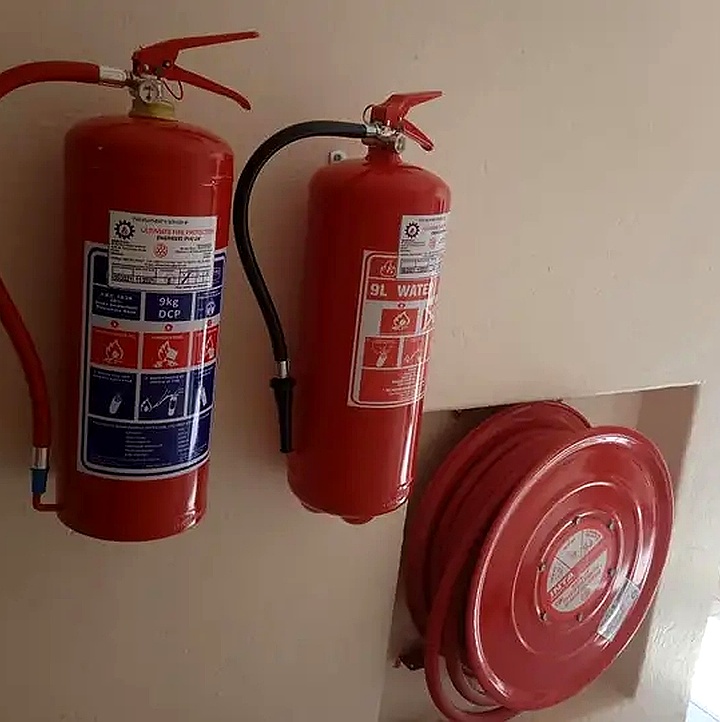
1. Water Extinguishers (Class A Only)
Appearance: Solid red body (no band) or red with white band
How It Works: Cools burning material below ignition temperature
Best For: Offices, schools, warehouses, storage areas with ordinary combustibles
DO NOT USE ON: Class B (spreads the fire), Class C (electrical shock hazard), Class K (grease fire explosion), Class D
2. Foam Extinguishers (Class A and B)
Appearance: Red with blue band
How It Works: Forms a blanket over flammable liquids, cooling and smothering
Best For: Mixed facilities with ordinary combustibles and flammable liquids, workshops, fuel storage areas
DO NOT USE ON: Class C (if foam contains water), Class K, Class D
3. Dry Chemical (ABC) - Multi-Purpose Extinguishers
Appearance: Red with white band
How It Works: Powder interrupts chemical reaction of fire
Best For: General-purpose protection in most commercial and industrial facilities—covers Classes A, B, and C. This is the most common type for general use.
Considerations: Powder can be messy and may damage sensitive electronics. Not for Class D or Class K.
4. Carbon Dioxide (CO2) Extinguishers (Class B and C)
Appearance: Red with black band, distinctive large discharge horn
How It Works: Displaces oxygen and cools the fire
Best For: Server rooms, electrical panels, computer labs, laboratories, flammable liquid areas—leaves no residue.
DO NOT USE ON: Class A (can re-ignite), Class K, Class D
5. Wet Chemical Extinguishers (Class K and A)
Appearance: Red with yellow band
How It Works: Creates soap-like foam that cools and seals grease
Best For: Commercial kitchens, restaurants, cafeterias, any facility with deep-fat fryers
DO NOT USE ON: Class B (can spread fire), Class C (electrical shock hazard), Class D
6. Clean Agent Extinguishers (Class A, B, C - HFC-227ea/FM200)
Appearance: Red with green band
How It Works: Interrupts chemical reaction, leaves no residue
Best For: High-value electronics, server rooms, data centers, telecommunications, control rooms, laboratories, museums
Advantages: Safe for electronics, non-conductive, no cleanup required, safe for occupied spaces
7. Dry Powder (Class D Only)
Appearance: Red with blue band or specialized labeling
How It Works: Absorbs heat and forms a crust over burning metal
Best For: Metal fabrication shops, laboratories handling combustible metals, industrial facilities
Note: Specialized agent required for specific metals (e.g., sodium chloride for magnesium, copper powder for lithium)
Extinguisher Size and Weight: Matching Capacity to Risk
Fire extinguishers are rated by the size of fire they can handle. Common sizes include:
| Size | Weight (Agent) | Discharge Time | Best Application |
|---|---|---|---|
| 2.5 lb / 1 kg | 1 kg | 8-10 seconds | Vehicles, small kitchens, boats |
| 5 lb / 2 kg | 2 kg | 10-12 seconds | Small offices, residential |
| 10 lb / 4.5 kg | 4.5 kg | 12-15 seconds | Commercial offices, retail, workshops |
| 20 lb / 9 kg | 9 kg | 18-22 seconds | Industrial, warehouses, high-hazard areas |
| Wheeled (50-350 lb) | 25-150+ kg | 30+ seconds | Industrial, flammable liquid storage, chemical plants |
Facility-Specific Selection Guidelines
Office Buildings
- Primary hazard: Class A (paper, furniture, computers)
- Recommended: ABC dry chemical or clean agent for computer areas
- Placement: Every 75 feet of travel distance, near exits
Server Rooms / Data Centers
- Primary hazard: Class C (electrical) with Class A components
- Recommended: Clean agent (FM200/HFC-227ea) or CO2 (if unoccupied)
- DO NOT use: Dry chemical (damages electronics), water (electrical hazard)
Industrial / Manufacturing
- Primary hazards: Classes A, B, C, possibly D
- Recommended: Large ABC units (20 lb) plus specialized units for specific hazards
- Wheeled extinguishers for high-risk areas
Commercial Kitchens
- Primary hazard: Class K (cooking oils/grease) plus Class A (combustibles)
- Required: Class K extinguisher within 30 feet of cooking equipment
- Secondary: ABC for other areas of kitchen
Vehicle Repair Shops / Fuel Storage
- Primary hazard: Class B (fuels, oils) plus Class C (electrical)
- Recommended: Large ABC or BC extinguishers, foam units
Laboratories
- Primary hazards: Varies widely—must conduct hazard analysis
- May need: ABC, CO2, clean agent, Class D (metal fires)
- Multiple specialized extinguishers in different zones
Extinguisher Ratings: Understanding the Numbers
Extinguisher ratings indicate fire-fighting capacity:
- Class A Rating: Number (1-40) indicates equivalent water volume in gallons. 4A = 5 gallons, 10A = 12.5 gallons.
- Class B Rating: Number (1-640) indicates square footage of fire tested. 10B = 10 sq ft, 20B = 20 sq ft.
- Class C: No numerical rating—indicates non-conductive agent suitable for electrical fires.
- Class K: No numerical rating—tested on commercial cooking appliances.
For most commercial facilities, UFPE recommends minimum 4A:60B:C rated ABC extinguishers (typically 10 lb size).
Placement and Mounting Requirements
According to fire safety standards:
- Extinguishers must be mounted on brackets or in cabinets
- Handle height: No more than 5 feet (1.5 m) for units under 40 lb; 3.5 feet (1 m) for wheeled units
- Maximum travel distance to extinguisher: 75 feet (23 m) for Class A hazards; 50 feet (15 m) for Class B hazards; 75 feet for Class C
- Locate along normal paths of travel, near exits
- Must be visible and accessible—not blocked by storage or equipment
- Appropriate signage indicating location required
Special Considerations
Temperature Sensitivity
Standard water and wet chemical extinguishers can freeze in unheated spaces. For outdoor or unheated areas, use ABC or other dry chemical units rated for -65°F to 120°F (-54°C to 49°C).
Corrosive Environments
Marine, chemical, or coastal facilities require stainless steel or specially coated extinguishers to prevent corrosion. UFPE can supply suitable units.
Cleanroom and Food Processing
Clean agent extinguishers (no residue) are required in cleanrooms and food production areas where contamination is a concern.
UFPE's Extinguisher Selection Process
When you partner with Ultimate Fire Protection Engineers, we don't just sell you extinguishers—we help you select the right ones:
- Facility Survey: We walk through your entire facility, identifying fire hazards in each zone.
- Risk Classification: We classify each area by predominant fire class (A, B, C, D, K).
- Quantity Calculation: We calculate how many extinguishers you need based on floor area and travel distances.
- Type and Size Selection: We recommend specific models and sizes for each zone.
- Placement Planning: We identify optimal mounting locations.
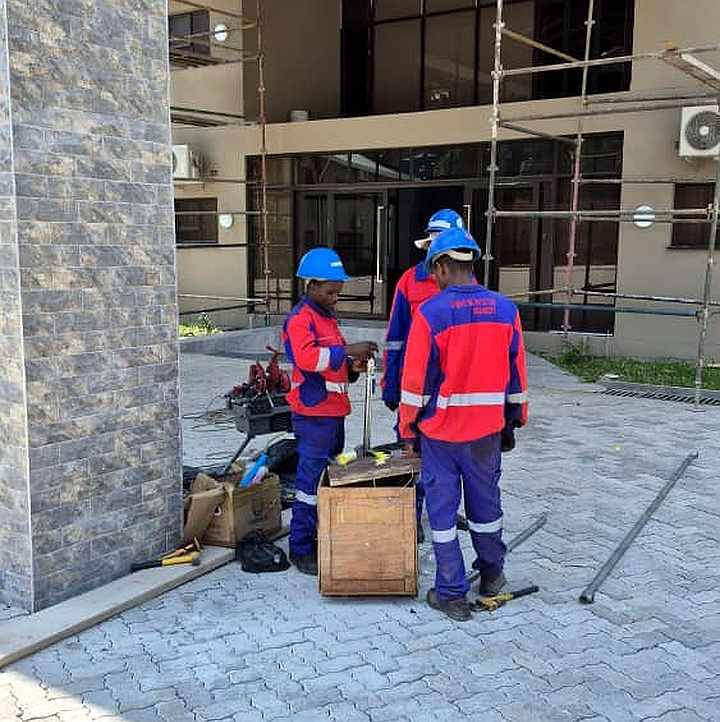
- Installation and Training: We install and train your staff on proper use.
Common Selection Mistakes to Avoid
- Buying only one type for entire facility: Different hazards require different extinguishers.
- Using water on electrical or grease fires: Extremely dangerous—water conducts electricity and explodes on grease.
- Using dry chemical in server rooms: The powder destroys hard drives and electronics.
- Buying undersized units: A 1 kg extinguisher cannot handle any significant fire.
- Placing extinguishers where they are blocked: Employees cannot reach them in an emergency.
- Ignoring maintenance requirements: An unserviced extinguisher may fail when needed.
Legal Requirements in Zimbabwe
Under regulations enforced by the Harare Fire Brigade and Fire Prevention Inspection Bureau:
- All commercial and industrial premises must have appropriate fire extinguishers
- Extinguishers must be properly maintained and serviced annually
- Records of inspections and maintenance must be kept
- Staff must receive training on extinguisher use
- Extinguishers must be accessible and properly mounted
UFPE ensures all supplied extinguishers meet local and international standards (SANS, BS EN3, or equivalent).
UFPE's Extinguisher Supply and Services
Ultimate Fire Protection Engineers provides:
- New extinguishers: All types and sizes, fully certified
- Extinguisher refilling: Professional recharge of discharged or expired units
- Annual maintenance: Comprehensive service including pressure testing, internal inspection, and parts replacement
- Hydrostatic testing: Required every 5-12 years depending on type
- Bracket and cabinet supply: Wall mounts, vehicle brackets, floor stands, cabinets
- Signage: Extinguisher location signs, instruction labels
Conclusion: Get Expert Help with Selection
Selecting the right fire extinguishers for your facility is a critical safety decision. The wrong choice can mean the difference between extinguishing a small fire and watching it become a major disaster—or worse, causing injury through improper agent use.
Ultimate Fire Protection Engineers has been helping Zimbabwe businesses select, supply, and maintain fire extinguishers since 2017. Our directors bring over 50 years combined experience in fire safety. Let us conduct a free facility assessment to determine your exact extinguisher needs.
Contact UFPE today for expert guidance on fire extinguisher selection, supply, installation, and ongoing maintenance.